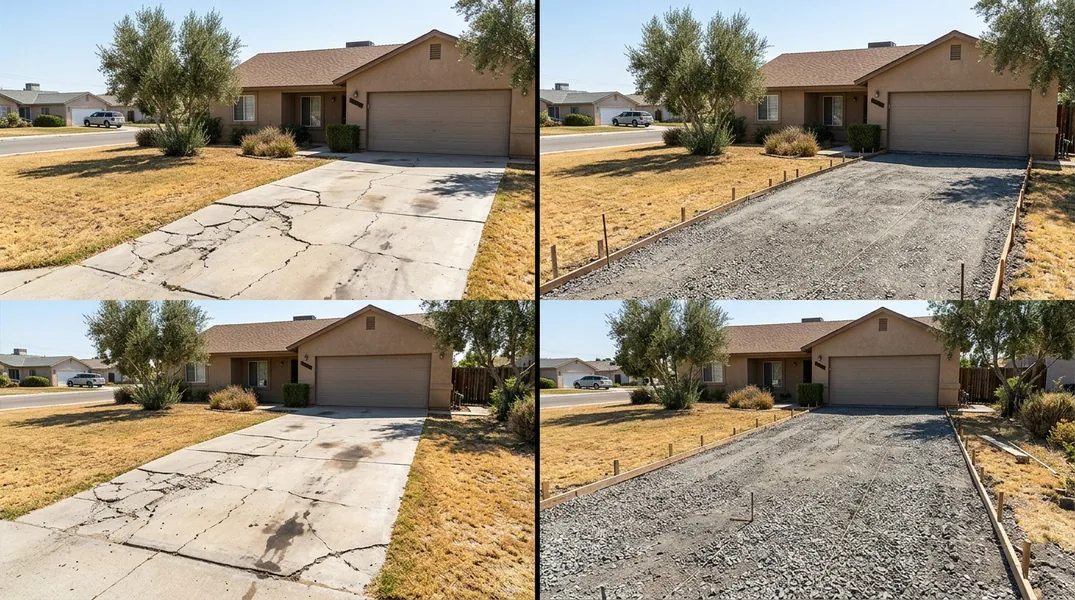
Why Timing Matters for Concrete Pouring in Bakersfield
If you're planning a Concrete Driveways project in Bakersfield, you might assume that any time of year works fine for pouring concrete. After all, concrete is concrete, right? The reality is far more nuanced. The season you choose to pour your concrete has a profound impact on how well it cures, how strong it becomes, and how long it will last. Bakersfield's unique climate, characterized by intense summer heat and mild winters, presents specific challenges that require careful planning.
Concrete curing is a chemical process that requires specific conditions to happen properly. Temperature, humidity, and wind all play critical roles in determining whether your new concrete will develop its full strength and durability. Pour concrete at the wrong time of year, and you risk surface cracking, uneven curing, reduced strength, and premature deterioration. Understanding when to pour concrete California homeowners should know about timing can save you thousands of dollars in repairs down the road. That's why working with an experienced Bakersfield concrete contractor like Bakersfield Concrete is so valuable. We know exactly when conditions are optimal for your project.
Spring: The Ideal Season for Concrete Pouring in Bakersfield
Spring, typically from late February through May, represents the best window for concrete pouring season Bakersfield residents should prioritize. During these months, daytime temperatures in Bakersfield typically range from the mid-60s to low 80s Fahrenheit, creating near-perfect conditions for concrete curing. The concrete curing weather heat is moderate and consistent, allowing the concrete to hydrate gradually without the stress of extreme temperature swings. Spring also brings slightly higher humidity levels compared to summer, which actually benefits the curing process by slowing evaporation and preventing surface cracks from forming too quickly.
Another advantage of spring pouring is that you'll have your project completed well before the intense summer heat arrives. This means your concrete will have achieved most of its strength gain during the optimal curing window, making it more resilient when exposed to Bakersfield's brutal summer temperatures later. If you're planning Concrete Patios, outdoor entertaining spaces, or other exterior concrete work, spring gives you the advantage of having your project ready for summer enjoyment without the stress of working around scorching temperatures.
Fall: Your Second Best Window for Pouring Concrete
Fall, spanning September through November, offers your second-best opportunity for concrete pouring season Bakersfield homeowners should consider. As summer heat breaks and temperatures gradually cool to the 70s and 80s, conditions become increasingly favorable for concrete work. Fall provides similar temperature stability to spring, though the trend moves downward rather than upward. This gradual cooling actually works in your favor, as it allows concrete to cure evenly without the thermal shock that can occur when hot concrete suddenly encounters cooler nighttime temperatures.
One particular advantage of fall pouring is that you're moving away from the extreme heat that lingers into August and early September. By mid-October, Bakersfield weather becomes increasingly predictable and mild. Your concrete will have a full winter and spring ahead of it to continue curing and gaining strength before the next summer heat cycle arrives. If you missed your spring window or had scheduling conflicts, fall is absolutely a viable alternative. Many experienced contractors, including Bakersfield Concrete, actively schedule projects during both spring and fall to take advantage of these optimal conditions.
Why Summer Heat Creates Problems for Concrete Curing
Summer in Bakersfield brings temperatures that regularly exceed 95 degrees Fahrenheit, and it's not uncommon for the mercury to climb past 105 degrees. While concrete can technically be poured during summer, the concrete curing weather heat presents serious challenges that compromise quality. When concrete is exposed to extreme heat, the surface water evaporates far too rapidly. This rapid evaporation causes the concrete to dry unevenly, creating stress on the surface that leads to cracking, crazing (fine surface cracks), and reduced durability. The top layer may appear dry while the interior is still curing, creating weak points throughout the slab.
Additionally, extreme heat accelerates the hydration process, which might sound beneficial but actually isn't. Faster hydration means the concrete doesn't develop its strength as uniformly or completely. The concrete may appear ready to use sooner, but it won't have achieved the durability and longevity you'd get from proper, gradual curing. If summer pouring is absolutely unavoidable, specialized techniques like extra water curing, shade cloth protection, and careful timing can help mitigate problems, but these add significantly to project costs. This is precisely why our team at Bakersfield Concrete recommends scheduling projects during spring or fall whenever possible.
Winter Considerations and Frost Risk in Bakersfield
Bakersfield winters are generally mild compared to northern California or other regions, with temperatures rarely dropping below freezing. However, winter concrete pouring still presents challenges that make it less than ideal. Temperatures in the 40s and 50s significantly slow the hydration process, meaning concrete takes much longer to cure. While this might seem like a minor inconvenience, slow curing during cold weather can result in weaker concrete that doesn't achieve its full design strength. Additionally, if unexpected frost does occur, it can damage concrete that hasn't fully cured, causing surface scaling and internal damage.
Winter also brings the lowest humidity levels of the year in Bakersfield, which increases evaporation rates and cracking risk despite cooler temperatures. If you absolutely must pour concrete during winter months, Bakersfield Concrete can implement protective measures, but we always recommend waiting for spring conditions if your timeline permits. Winter is often better suited for planning your project, getting detailed pricing estimates, and preparing your site so you're ready to move forward when spring arrives.
Planning Your Concrete Project: What to Do Now
Whether you're considering Stamped & Decorative Concrete, Concrete Repair & Resurfacing, or any other concrete work in Bakersfield, the best time to start planning is now. Contact Bakersfield Concrete at (661) 384-6909 to discuss your project timeline and get professional guidance on the optimal season for your specific needs. Our experienced team can evaluate your site conditions, discuss your goals, and recommend whether spring or fall would work best for your project. We can also help you understand what to expect in terms of timeline and pricing based on seasonal factors.
If you're ready to move forward, we encourage you to request a free estimate from our team. We serve Bakersfield and surrounding areas including Delano, Wasco, and Shafter. During your consultation, we'll discuss the best season for your project, help you understand what to expect during the curing process, and ensure you have realistic expectations for your investment. With proper timing and professional execution, your concrete project will provide decades of reliable service and beauty.
Looking for a professional tree service in Bakersfield? Bakersfield Concrete responds fast for all your concrete needs.
Get a Free QuoteOur services: Concrete Driveways · Concrete Patios · Stamped & Decorative Concrete